In Cape Town and most large South African metros, yes: municipal tap water is treated and tested against the national drinking water standard, SANS 241, and is safe to drink. Quality is less even elsewhere, with the latest national Blue Drop assessment rating almost one in five water supply systems as high or critical risk. What reaches the glass also depends on supply outages and on the tanks and pipes on your own property.
Can you drink tap water in Cape Town?
Yes. Cape Town's municipal water consistently ranks among the best-managed supplies in the country, and the City's published results show why:
- Regular testing: the City's laboratory analyses more than 5 700 samples a year from sampling points across the network.
- High compliance: measured against SANS 241, quarterly compliance sat between 99.0% and 99.6% in every quarter from July 2021 to June 2025.
- Strong Blue Drop results: the City scored 98% in the 2023 full Blue Drop audit and kept its certification, when only 26 water supply systems nationally qualified.
- A strong province: in the 2025 Blue Drop progress assessment, the Western Cape had the lowest average risk rating of any province and no critical-risk systems.
Two caveats apply. Those results describe water in the City's network; past your meter, the pipes, geyser and any storage tank are your responsibility. And even well-run systems occasionally issue precautionary notices. In February 2024 the City asked parts of the far south peninsula, including Fish Hoek and Simon's Town, to boil drinking water after tests picked up anomalies in the network. The notice was lifted two days later, once two consecutive rounds of samples met SANS 241.
For most Cape Town homes, a filter is about taste, sediment and storage rather than safety. Our Cape Town water filter page explains how we approach properties that also run a borehole, wellpoint or rainwater tank.
How tap water is regulated in South Africa
SANS 241, the drinking water standard
SANS 241 is the South African National Standard for drinking water. It sets limits for microbiological, physical, aesthetic and chemical properties, grouped by the kind of risk they carry. Acute health limits cover things that can make you ill quickly: E. coli, for example, must not be detected at all in a 100 mL sample. Chronic health limits cover long-term exposure, such as free chlorine at 5 mg/L or less. Aesthetic limits cover colour, cloudiness and dissolved minerals, with total dissolved solids (TDS) at 1 200 mg/L or less.
Municipalities test their water against these limits, and if the results show that the water poses a health risk, the municipality must inform its consumers.
The Blue Drop programme
Blue Drop is the Department of Water and Sanitation's (DWS) regulatory assessment of drinking water systems. Full audits, published every two years, cover everything from treatment works to the distribution network, including water quality, plant condition and staff qualifications. Shorter progress assessments fill the years in between.
The last full report, released in December 2023 for the 2021/22 municipal year, made uncomfortable reading. Of 958 water supply systems assessed, 46% had poor or bad microbiological compliance, up from 5% in 2014.
The most recent results come from the 2025 Blue Drop progress assessment, released on 31 March 2026. It covered 1 006 systems for the year from July 2023 to June 2024:
| Risk category | 2023 full report | 2025 progress assessment |
|---|---|---|
| Low risk | 60% | 62% |
| Medium risk | 19% | 20% |
| High risk | 11% | 10% |
| Critical risk | 10% | 8% |
DWS says the decline in drinking water quality has stabilised, "albeit at a high level". Metro systems are generally performing well, the Western Cape and Gauteng have the strongest risk profiles, and the Northern Cape and Free State remain the main concerns. Because the audits look back at a past financial year, DWS cautions that they do not show any municipality's current water quality. The next full report is due in March 2027.
Why water quality varies from place to place
Municipal capacity and infrastructure
DWS links poor results to treatment plants not being run to standard procedures, infrastructure left to deteriorate through lack of maintenance, and municipalities without enough qualified staff or maintenance budget. Where those problems exist, water can leave the works below standard or deteriorate on its way to your tap.
Power cuts and water outages
Treatment works and pump stations run on electricity, so a long power cut, whether from load shedding or a local fault, can mean low pressure or dry taps. When supply returns, water often runs cloudy or discoloured as air and settled sediment flush through the pipes. Running a cold tap near the main stopcock until it clears is the usual municipal advice.
Tanks and pipes on your property
Many homes keep municipal water in a JoJo tank as a backup. The chlorine that protects municipal water fades the longer it sits, especially in warm weather. Tanks also gather sediment and, if lids and screens are loose, insects and debris, so keep them covered, clean them periodically and treat tank water before drinking it. Inside the house, corroding galvanised pipes in older homes can give water a brown tinge or metallic taste even when the municipal supply is fine.
Boreholes, wellpoints and rainwater
Private sources sit outside the municipal system, so nobody tests them except you. Groundwater can carry iron, manganese, hardness or bacteria, and rainwater picks up whatever is on the roof and in the gutters. Only a laboratory test against SANS 241 tells you what is there. Our guides on whether borehole water is safe to drink and rainwater filtration cover both in detail. In Cape Town, alternative water systems connected to household plumbing also need City approval and backflow protection, and the City restricts how that water may be used indoors, so check the current rules first.
Chlorine taste and hard water: a nuisance, not a hazard
Why tap water tastes of chlorine
Chlorine is added at the treatment works to kill germs and to leave a small residual that keeps water protected all the way to your tap. According to the World Health Organization (WHO), most disinfected drinking water carries 0.2 to 1 mg/L of chlorine, and some people can taste it at levels as low as 0.3 mg/L. The WHO guideline value and the SANS 241 limit are both 5 mg/L, so a noticeable chlorine taste means the water has been disinfected, not that it is unsafe.
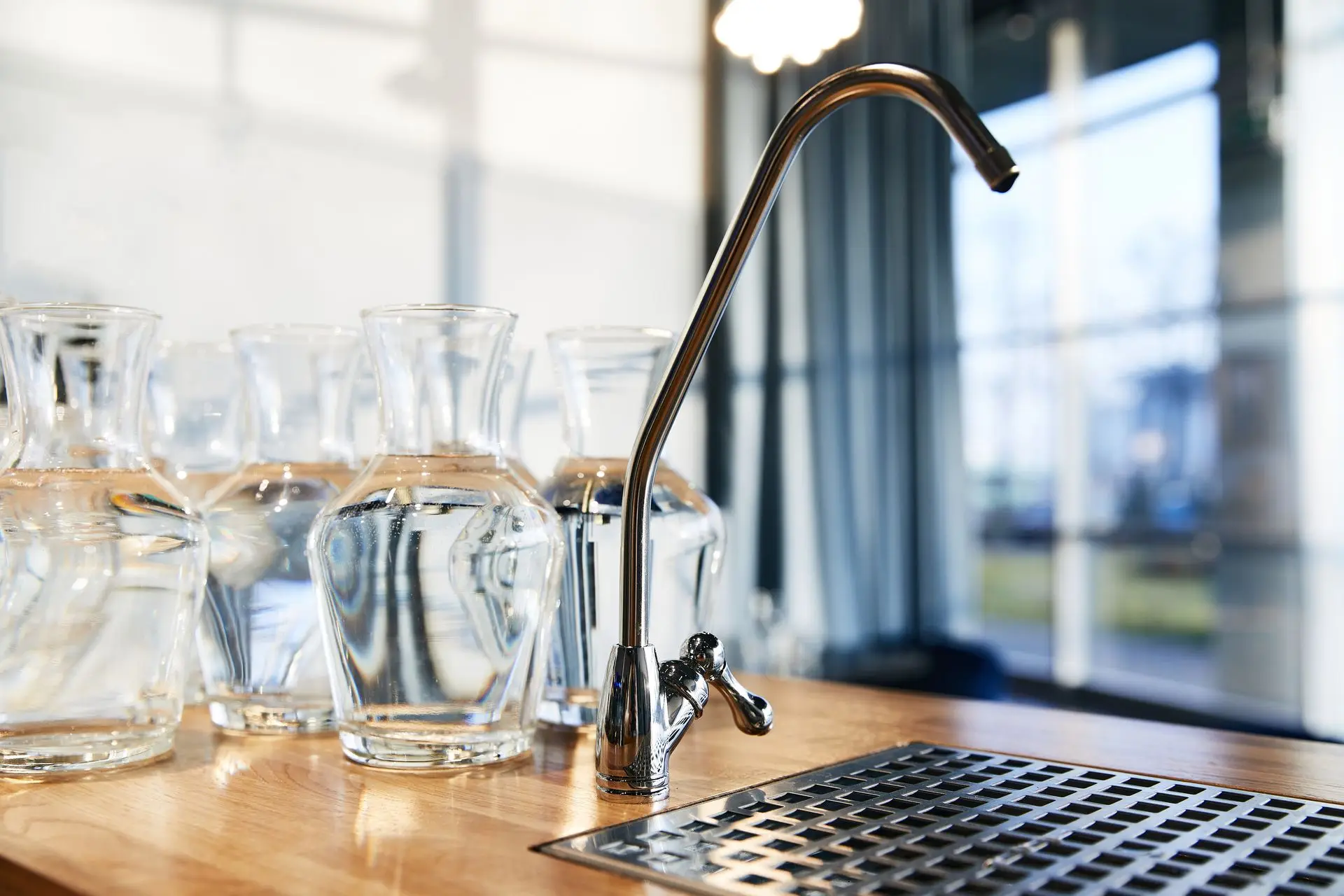
If the taste puts your family off drinking water, that is still a good reason to filter. Carbon water filters reduce chlorine and the compounds behind most unpleasant tastes and smells, and a dedicated filter tap at the kitchen sink keeps that water on hand.
Hard water in South Africa
Hardness comes from dissolved calcium and magnesium. It leaves scale in kettles, geysers and on shower glass and makes soap harder to lather, but the WHO proposes no health-based guideline value for it. Hardness depends mainly on the source. Most of Cape Town's supply comes from mountain catchment dams and is soft to slightly hard, while the City notes that groundwater is usually harder, so areas and properties on boreholes often see more scale. Sediment and carbon filters do not remove hardness; that takes a water softener or, for drinking water only, reverse osmosis.
Boil-water notices: what to do
A boil-water notice means your municipality cannot currently guarantee that the water is microbiologically safe, typically after a pipe burst, a treatment problem or a failed test. Until it is lifted:
- Bring drinking water to a full rolling boil, which the WHO says is enough to inactivate harmful bacteria, viruses and protozoa, then let it cool in clean, covered containers.
- Use boiled or bottled water for drinking, ice, food preparation, baby formula and brushing teeth.
- Do not rely on an ordinary carbon or sediment filter. These improve taste and clarity, but they are not disinfection.
- Keep boiling until your municipality formally lifts the notice.
Boiling deals with germs, not chemicals. It will not remove heavy metals, salts or most other chemical contaminants.
How to check your own municipality's water
- Read the Blue Drop results. DWS publishes the national report and detailed provincial reports on its website, with results for each municipality's water supply systems.
- Look for local test results. Some municipalities publish their own; the City of Cape Town releases quarterly tap water quality reports. DWS advises that tap water is safe to drink if your municipality confirms it is tested and meets SANS 241.
- Follow official notices. Boil-water and supply notices appear on municipal websites and official social media channels.
- Use your senses, within limits. Report water that stays cloudy, discoloured or unusual-smelling after running the tap. Clear water is not proof of safety, though, because bacteria cannot be seen or smelt.
- Test private sources. For a borehole, wellpoint or rainwater tank, ask a SANAS-accredited laboratory for a SANS 241 analysis.
When does a home water filter make sense?
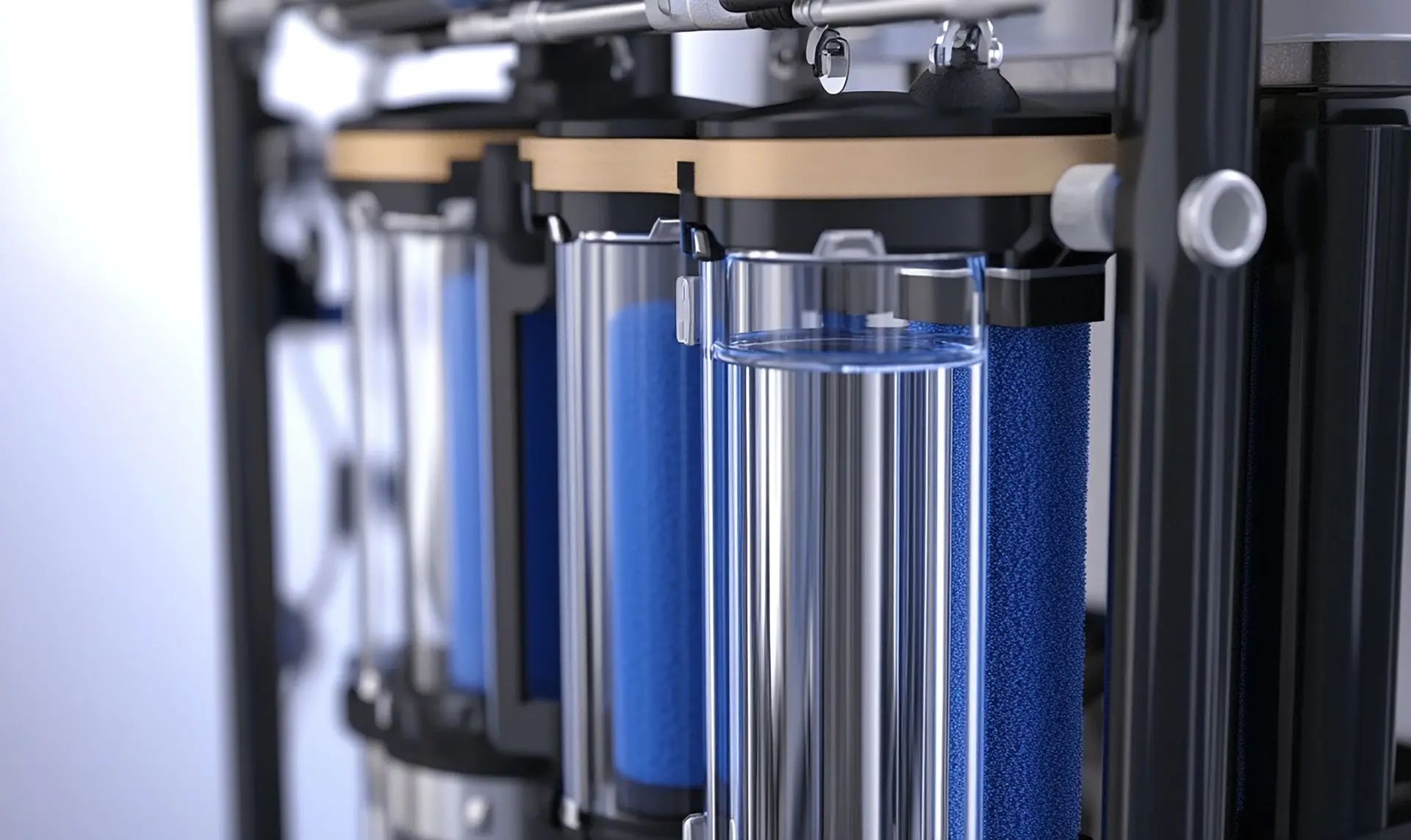
If your municipal water is compliant, a filter is a choice rather than a necessity, and the problem you want to solve decides the system. Our guide to how water filtration systems work explains each stage.
- Chlorine taste and smell: a carbon filter under the sink, feeding a filter tap, is usually enough.
- Outages, sediment and tank storage: a sediment stage catches grit after supply interruptions, and UV as the final stage disinfects stored water once the earlier stages have made it clear enough for UV to work.
- High dissolved solids or peace of mind: reverse osmosis removes most dissolved salts and hardness minerals. It sends some water to drain, so it is usually fitted for drinking water only.
- Boreholes and rainwater: test first, then build the system around the results.
Frequently asked questions
Is Cape Town tap water safe for visitors?
Yes. Visitors drink the same SANS 241-compliant water as residents, so there is no need to buy bottled water in the city, although you may notice a slight chlorine taste. In smaller towns and rural areas, check for local notices, because quality varies more outside the metros.
What is the Blue Drop report?
It is the Department of Water and Sanitation's assessment of municipal drinking water systems, covering water quality, treatment capacity, staff skills and risk management. The latest, a progress assessment released in March 2026, rated 62% of systems low risk and 18% high or critical risk.
Does a water filter make municipal water safer?
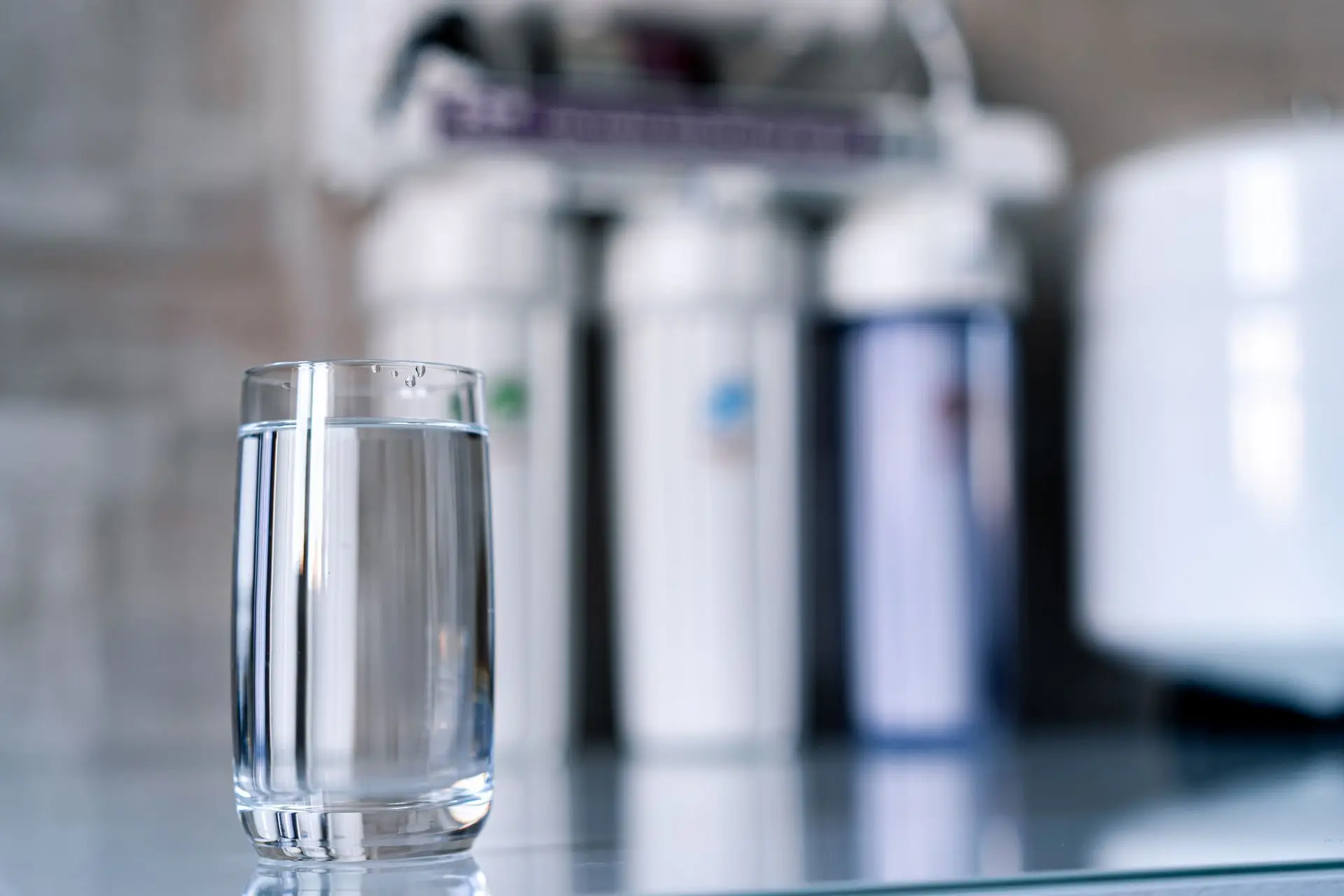
If your water already meets SANS 241, a filter mainly improves taste, smell and clarity. It takes on a safety role only where there is a specific risk, such as stored tank water or a private borehole, and then it needs a disinfection stage such as UV.
Why does my tap water look cloudy or brown?
Milky water that clears when left to stand is usually air in the pipes, often after a supply interruption. Brown or yellow water usually means sediment stirred up in the mains or corrosion in older pipes. Run the cold tap until it clears, and if it does not, report it to your municipality or check your own plumbing.
If you want better water at every tap rather than only the kitchen, start with our home water filtration options, then request a quote with your water source, property type and area so we can recommend the right stages for your home.